
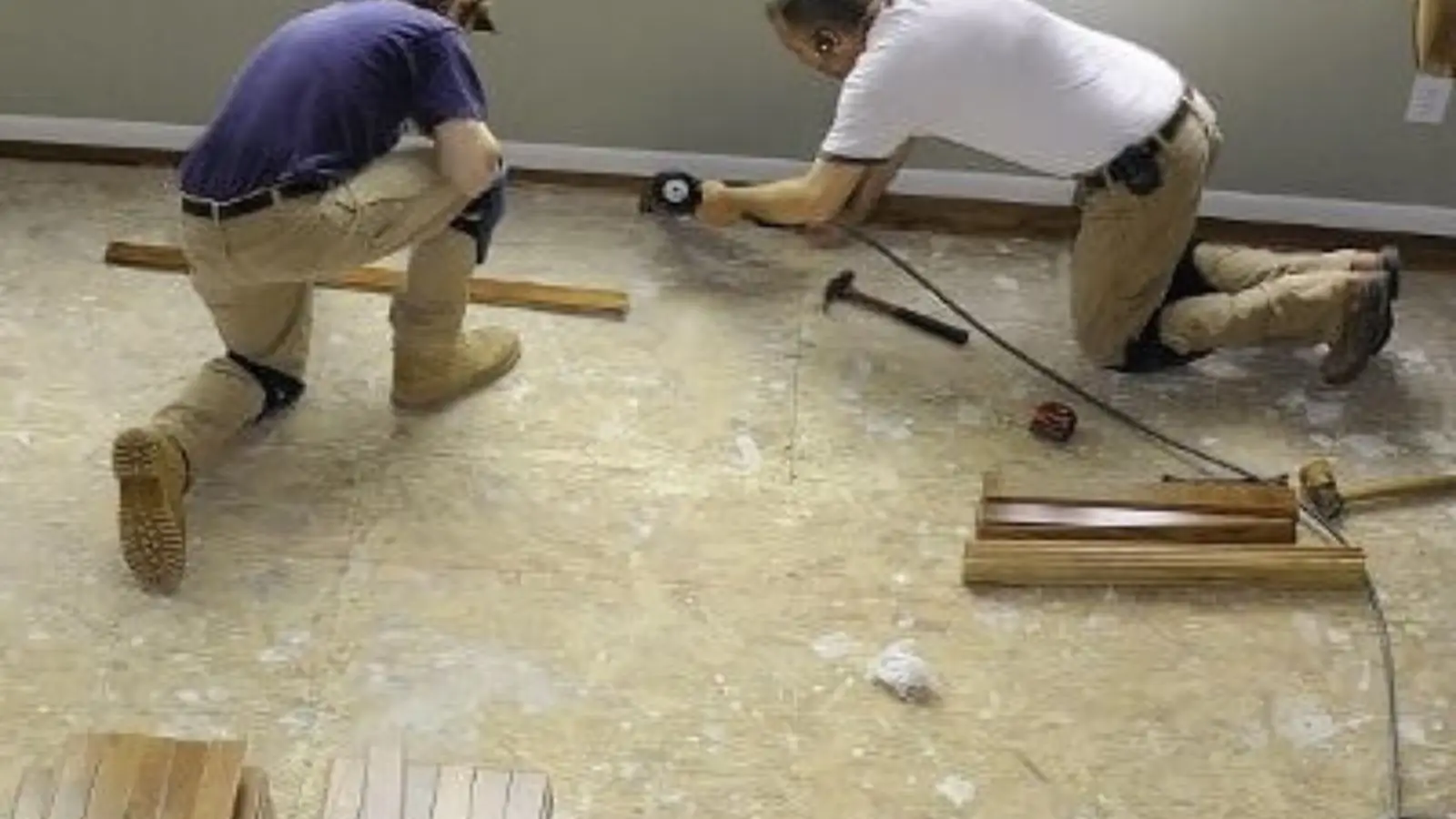
Water damage repair is the rebuild that happens after a loss has been dried: new drywall, insulation, flooring, paint, trim and cabinets. In Mission Hills, CA it is the stage where a home goes back to how it looked before the leak. If the structure is still wet, repair has to wait, and the water mitigation page explains why.
Repair work follows the drying readings, not the calendar. A wall that looks dry can still read wet inside, and closing it up early locks moisture in. Technicians confirm dry readings first, then rebuild, which protects the new materials from the same problem.
Common places repair is needed
Ceilings
Stains, sagging, bubbled paint and cracked texture show up where a roof or upstairs line leaked.
Walls and baseboards
Swollen baseboard, soft drywall and peeling paint point to water inside the wall.
Wood and laminate floors
Cupping, crowning and gaps appear as flooring takes on and loses moisture.
Cabinets and vanities
Under-sink leaks swell particleboard and leave a musty smell that paint cannot hide.
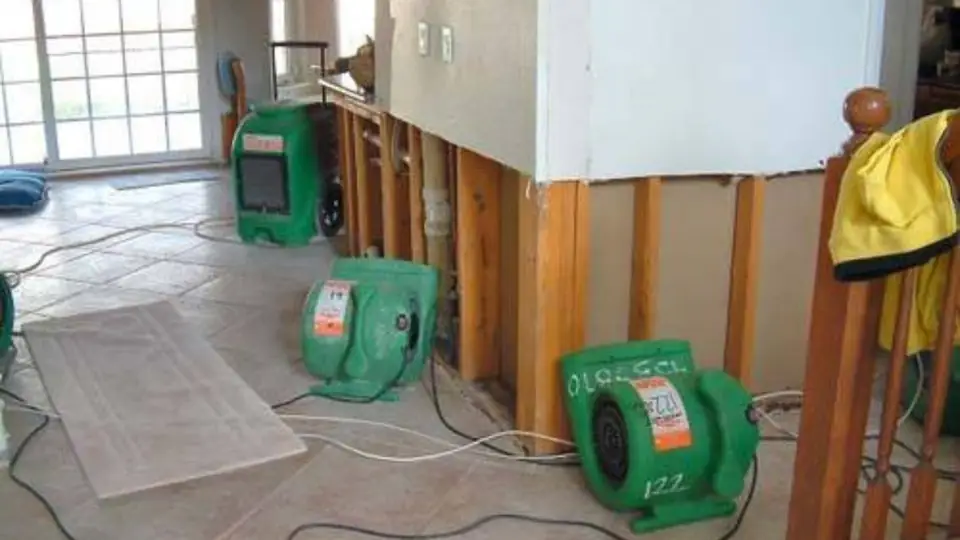
Ceiling and wall water damage repair
A ceiling stain is a symptom, not the damage. Behind it, insulation may be soaked and drywall may be soft, so the first move is finding and stopping the source. A roof leak and a plumbing leak above the ceiling look alike from below, and the repair differs for each.
Small, dry stains can be sealed with a stain-blocking primer and repainted. Sagging, bubbling or soft drywall should be cut out back to dry, solid material, the insulation replaced and new board hung, taped, textured and painted. Matching an older texture takes practice, and ceiling texture applied years ago should be tested for asbestos before it is sanded or scraped.
Walls follow the same logic. Remove wet baseboard and the lower strip of drywall, dry the cavity, then patch with new board and match the paint across a full wall so the repair does not show as a patch. A wall that stays damp after the source is fixed needs moisture readings before anything is closed.
Ready to talk about repairs?
Describe the stain, the floor or the wall and a technician can explain the scope before work starts.
Hardwood floor cupping and drying
Cupping happens when boards absorb moisture from below and the edges rise higher than the centers. It can follow a dishwasher leak, a slab moisture problem or a washer overflow. Many cupped floors flatten as they dry, so sanding too early can leave the boards crowned once they settle.
Drying wood floors uses specialized mats or panels that draw moisture from the boards while dehumidifiers pull it from the room. If the boards stay cupped after drying, they can be sanded and refinished. If they are buckled or delaminated, replacement is the honest answer.
| Damage type | Repair approach | Replace or restore? |
|---|---|---|
| Small ceiling stain, no sag | Fix source, prime with stain blocker, repaint | Restore |
| Sagging or soft ceiling drywall | Cut out, replace insulation, hang and finish new board | Replace |
| Wet baseboard and lower drywall | Remove, dry cavity, patch, repaint wall | Replace the wet portion |
| Cupped hardwood | Dry fully, wait for boards to settle, sand and finish | Restore if not buckled |
| Swollen cabinet base | Assess for mold, rebuild base or replace unit | Usually replace |
Repair options and honest trade-offs
Repair can be done in stages, and sometimes the cheapest option now is the costliest later. Patching around a leak that was never fixed ends with the same stain in a year. Replacing a whole wall of drywall costs more upfront than patching but removes the guesswork about what is behind it.
Cosmetic repair and mold are linked. If wet material stayed in place for days, test and inspect before painting over it, and see mold remediation for what that involves. Paint over mold tends to peel, so cleaning and drying come first.
Local conditions that affect repairs in Mission Hills
Mission Hills is part of the City of Los Angeles, so permit questions for larger rebuilds go to the Los Angeles Department of Building and Safety. Permit rules vary by the kind of work, so ask the department before starting anything beyond cosmetic patching. Plumbing and electrical repairs are common reasons for a permit conversation, and a licensed contractor can usually tell you what applies.
Neighborhoods nearby share this process. If your repair is across the line in San Fernando, that city runs its own building and safety office, which is covered on the San Fernando page. If contaminated material is part of the job, water damage cleanup explains how it is removed.
What affects the cost of repairs
Rebuild scope
A repainted wall and a new kitchen floor are different projects.
Materials
Hardwood, tile, cabinets and textured ceilings cost more than basic drywall.
Drying history
A fully dried structure rebuilds faster than one that is still giving off moisture.
Finish matching
Matching old texture, paint and trim takes extra steps.
Insurance may pay for repairs after a sudden and accidental loss, while slow leaks and long-term neglect are often excluded. Check your policy and ask your insurer what the adjuster needs. For the price of your own repair, call (818) 337-2642 and ask for the scope to be explained first.
The published standard behind the work
The industry reference for water loss work is ANSI/IICRC S500, the Standard for Professional Water Damage Restoration. It describes water categories, drying goals and how to document readings. Citing it here is not a claim about any certificate. It simply gives you a published benchmark to ask a company about.
Safety checks before you touch anything
- If water is near outlets, appliances or a light fixture, stay out and shut off power at the panel only from a dry spot.
- Do not walk under a sagging or bulging ceiling.
- Leave the area if you smell sewage, gas or burning, and call 911 for gas or fire.
- Keep children and pets out of the wet room.
Water damage repair questions
How long after drying can repairs start?
Repairs start when moisture readings show the materials are at normal dry levels. That timing varies with the materials and the damage, so ask your technician to share the readings before rebuilding begins.
Can I paint over a water stain?
Only after the source is fixed and the area is dry. Use a stain-blocking primer first, or the stain will bleed through new paint, and inspect for mold before painting.
Will the repaired area match the rest of the room?
It can, with careful texture and paint matching. Painting a whole wall or ceiling plane, rather than spot painting, gives the cleanest result.
Does repair include fixing the leak itself?
No. A plumber or roofer repairs the source, and repair work follows. A leak that is still active will damage the new materials too.