
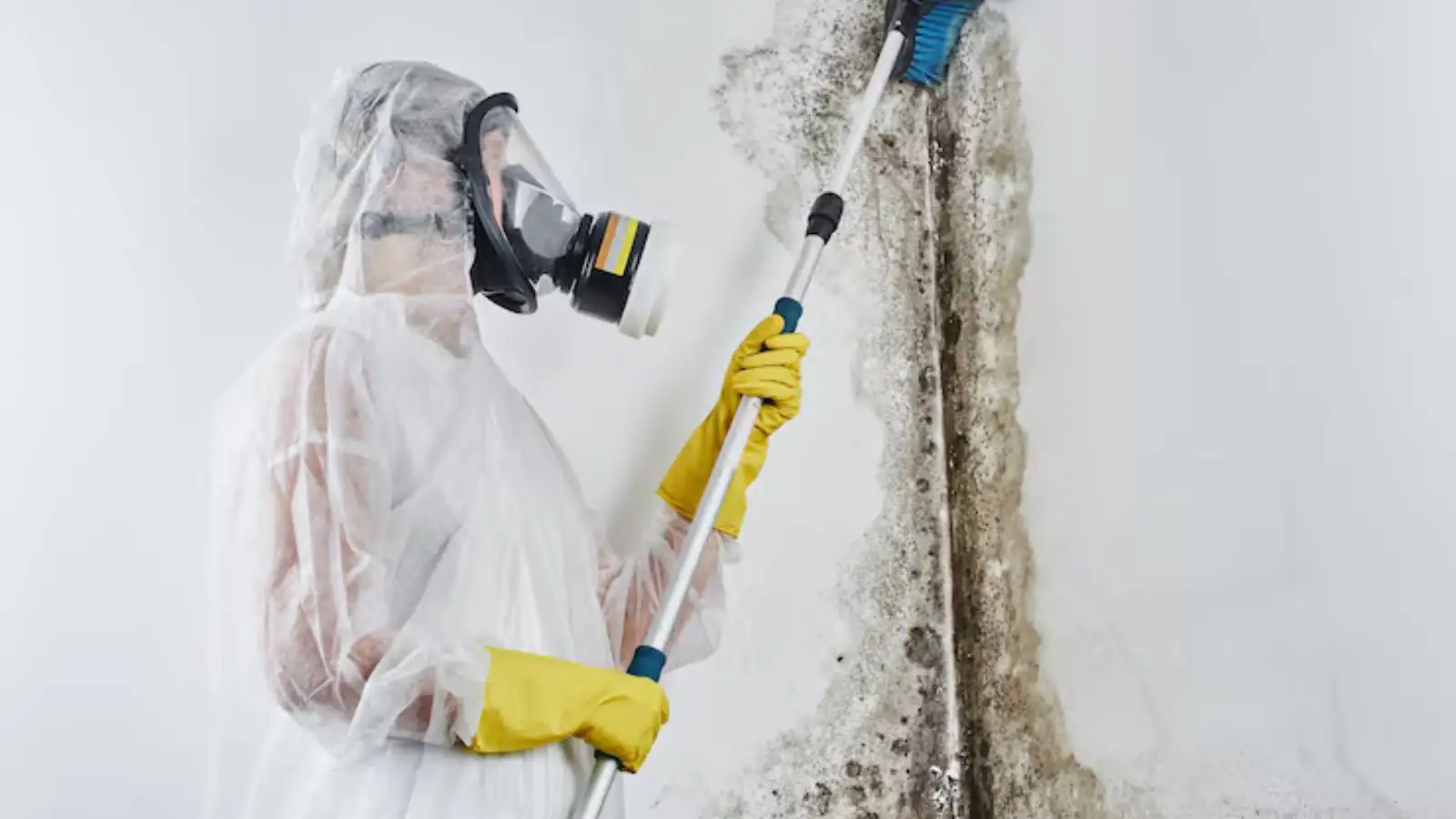
Mold remediation is the process of containing, removing and verifying the removal of mold growth after moisture has been dealt with. In Mission Hills, CA it usually begins with a leak, a musty smell or dark spots on a wall or ceiling. Call (818) 337-2642 to talk through what you see, and the line is open 24/7.
Mold needs moisture to grow, so the leak or humidity source has to be fixed before remediation can succeed. The work follows the ANSI/IICRC S520 standard for mold remediation, and you can ask any company whether its crews work to it. Health questions about mold belong to your physician.
Musty smell, dark spots or a ceiling stain: is it mold?
People usually do not search for remediation first. They search for a musty smell in a closet, black spots in a bathroom corner, a stain that keeps coming back or fuzzy growth behind furniture. All of those can be mold, and all of them point to moisture that was never fully dried.
Mold is not always visible, and not every dark spot is mold. An inspection with a moisture meter and a camera can show where moisture is and whether growth is likely behind a surface. That inspection is where this page begins, and the rest covers what comes next.
Bathrooms
Mold shows in corners of shower walls and ceilings, often from a missing fan or a slow leak.
Closets and exterior walls
Cool walls and little air movement hold moisture, especially behind furniture.
Under sinks
A slow drip can keep cabinet bases damp for months.
Ceilings below a leak
Roof, AC condensate line or upstairs plumbing leaks wet insulation and drywall.
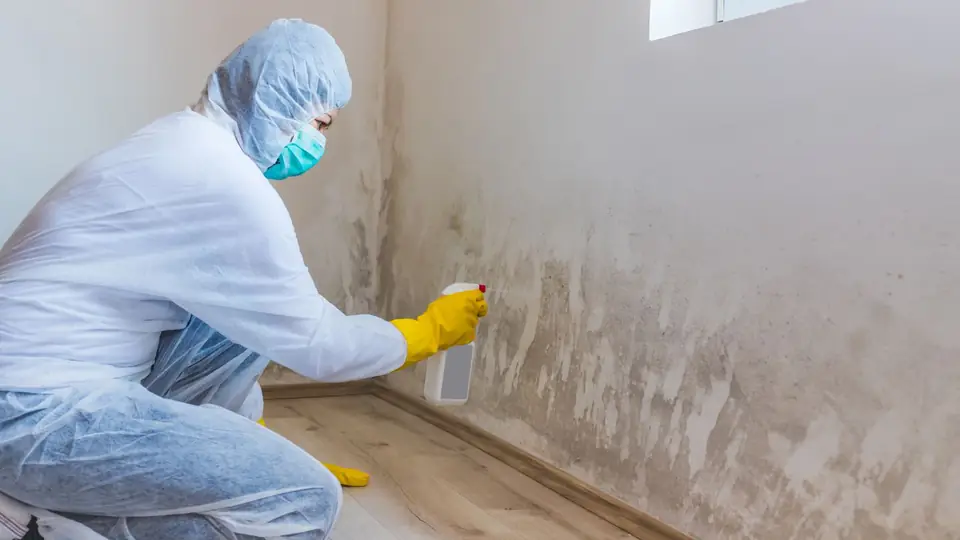
Mold after water damage
The most common route to a mold job is an unresolved water loss. A toilet leak above a finished room, a roof or siding leak, a clogged AC condensate line or a slow sink drip can all wet materials long enough for mold to grow. When the leak is fixed and the area is dried promptly, mold often never appears.
If you had water damage recently, read about water mitigation and water damage cleanup, because proper drying is the best prevention. If drying was late or incomplete, an inspection can tell you whether mold is present. No honest company can promise that mold will never return, because that depends on moisture control afterward.
Mold removal and black mold cleanup
Remediation starts with containment. Plastic barriers and negative air machines with HEPA filtration keep spores from drifting into the rest of the home during work. Technicians in protective gear remove moldy porous materials such as drywall, insulation and carpet, and clean or sand hard surfaces.
Black mold is a common name for dark-colored growth, and color alone does not tell you how serious it is. The same containment and removal process applies. EPA guidance says small areas of less than about 10 square feet can often be cleaned by a homeowner, while larger areas, extensive water damage and sewage-related growth call for professionals.
Porous materials such as ceiling tile and carpet that become moldy may need to be thrown away, because growth extends into the material. Hard surfaces can be scrubbed with detergent and water and dried completely. Painting or caulking over mold is not a fix, because the paint is likely to peel.
Seeing mold or smelling it?
Call the line to talk through what you see. A technician can explain inspection and scope before work starts.
Mold inspection, testing and clearance
Inspection looks for moisture sources and visible growth. Testing, where it is used, samples air or surfaces to show what is present. Many callers ask for independent clearance testing, which is a check done after remediation to confirm the area is clean enough.
Independent clearance means the person who tests is not the same company that removed the mold, which keeps the check unbiased. Clearance matters in practice. For example, a home sale or loan may require proof that mold was removed. We cannot promise what a lender or buyer will accept, so ask them what documentation they need.
| Stage | What happens | Why it matters |
|---|---|---|
| Moisture inspection | Meters and camera locate wet areas | Mold cannot be fixed until the water source is |
| Containment | Barriers and negative air pressure | Stops spores moving to clean rooms |
| Removal | Moldy porous material removed, hard surfaces cleaned | Takes out the growth itself |
| Drying | Dehumidifiers and air movers | Takes away the moisture mold needs |
| Clearance check | Visual and, where used, testing | Verifies the work before rebuild |
Mold in Mission Hills homes
Mission Hills is part of the City of Los Angeles, and rebuild permits for larger work go through the Los Angeles Department of Building and Safety. Permit rules vary by the kind of work, so ask the department before you start tearing out walls. If you are not sure whether state licensing applies to mold work, ask whether your state licenses mold work and ask for the license information in writing.
Rental units and condos add questions about who pays and who must act. Document the problem with photos, notify the landlord or association in writing and keep copies. After remediation, water damage repair restores drywall, paint and flooring.
What affects the cost of mold remediation
Affected area
More square footage means more containment, labor and material removal.
Materials
Mold in drywall is a different job from mold in framing or insulation.
Containment level
Larger or hidden growth needs a more involved setup.
Testing and clearance
Inspections, sampling and independent clearance add steps.
Rebuild scope
Removed materials must be replaced and refinished afterward.
Insurance may cover mold that results from a sudden and accidental water loss, while mold from long-term neglect is often excluded. Policies differ, so check yours or ask your insurer. Want to hear how the scope and price would be built for your home? Call (818) 337-2642 and ask for it to be explained first.
Mold remediation questions
Can I remove mold myself?
Small areas, under about 10 square feet according to EPA guidance, can often be cleaned by a homeowner. Larger areas, widespread water damage and anything involving sewage should be handled by professionals.
Will mold come back after remediation?
It can if moisture is not controlled. Remediation removes growth, but only fixing the water source and keeping the area dry keeps it from returning.
Do I need mold testing?
Not always. A moisture inspection and visual assessment may be enough, and testing is used when growth is hidden or documentation is needed. Ask what the testing would add.
Does a home sale or loan require mold clearance?
Sometimes. A lender or buyer may ask for proof that mold was removed. Independent clearance testing provides documentation, but we cannot promise what a lender will accept.
Is mold dangerous to my family?
Health questions belong to your physician. If you have health concerns, talk to a doctor before work starts and keep children and sensitive people away from the work area.