
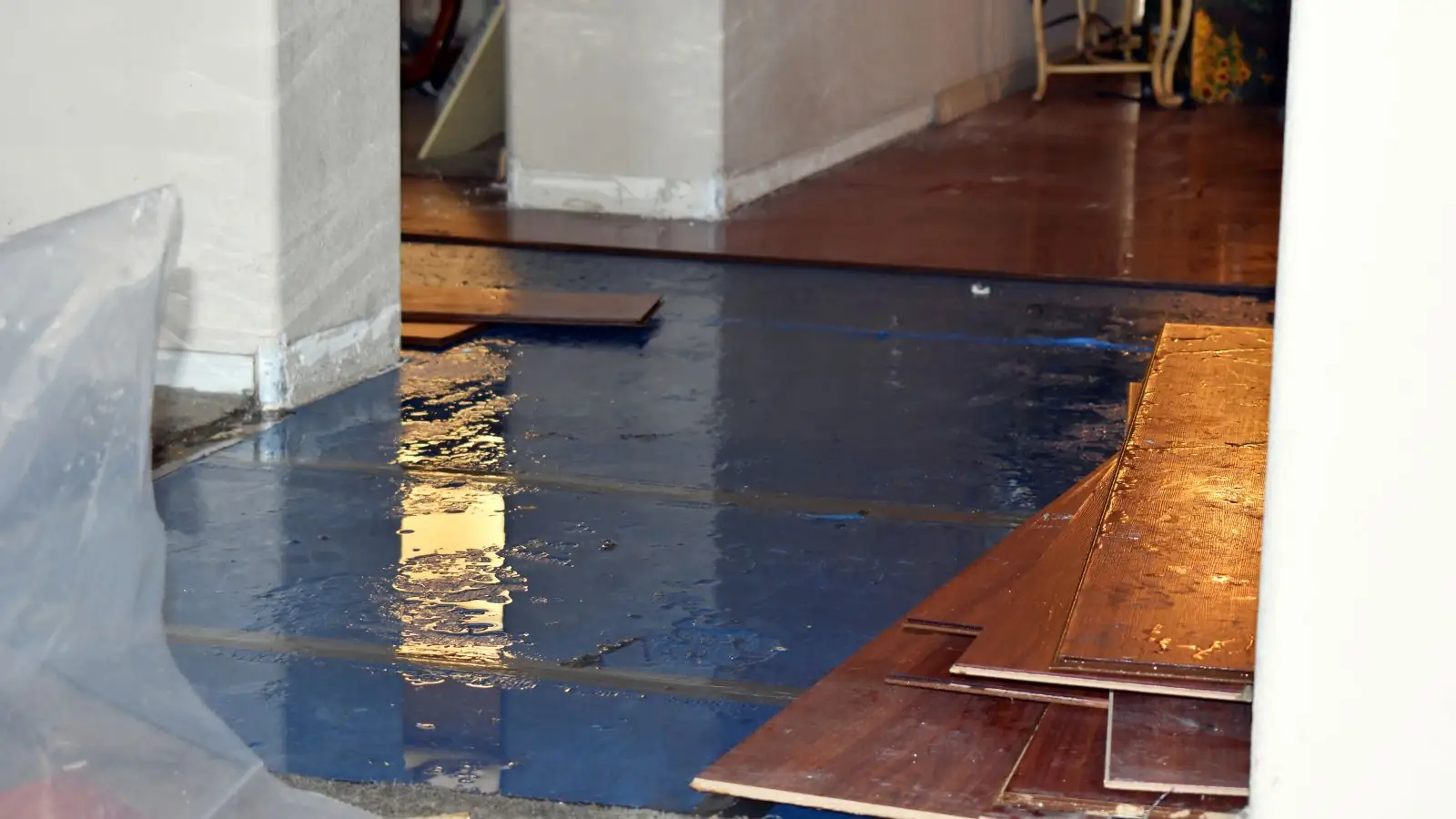
Water damage to wood floors in Mission Hills, CA shows up in specific ways, and each one tells you something about the moisture. Boards that cup, crown, buckle or gap are reacting to water, and the right response depends on how much and for how long. Acting fast can save a floor, and acting wrong can ruin one.
This guide explains the types of damage, what drying involves and when sanding and refinishing makes sense. It also covers when replacement is the honest answer. It applies to solid hardwood and, with some differences, to engineered and laminate floors.
What the damage tells you
Cupping
The edges of each board rise higher than the center, usually from moisture coming from below.
Crowning
The center rises higher than the edges, often after a cupped floor was sanded too early.
Buckling
Boards lift away from the subfloor, a sign of serious moisture.
Gaps and staining
Boards shrink and leave gaps after drying, and dark stains suggest long-term water.
Cupping is the most common. A dishwasher leak, a washing machine overflow or moisture from a slab below can all cause it. Many cupped floors flatten as they dry, so wait before sanding.
Drying wood floors
Drying wood is slower than drying drywall because wood holds moisture tightly. Specialized floor drying mats or panels draw moisture out through the boards while dehumidifiers lower the room humidity. Technicians read the wood moisture content daily and compare it to a dry reference.
Do not use heaters or fans alone to rush it. Drying too fast can split boards or create a worse warp. Controlled drying with equipment and readings is slower and safer.
| Floor type | How it reacts to water | Typical outcome |
|---|---|---|
| Solid hardwood | Absorbs and swells, then cups or crowns | Often saved if dried quickly |
| Engineered wood | Layers can separate when soaked | Saved if wet briefly, often replaced if soaked |
| Laminate | Core swells and edges lift | Usually replaced when wet |
| Floating floors | Water can travel underneath | Planks may be lifted and dried |
Wood floor wet?
Call the line. A technician can explain how floor drying and moisture readings work.
Sand, refinish or replace?
If the boards flatten after drying, sanding and refinishing can restore the surface. Wait until readings show the wood is back to a normal level. Sanding while the floor is still cupped leaves a crowned floor once it settles.
If boards are buckled, split or stained through, replacement is usually the honest answer. Mold under or between boards is a separate issue and is covered on the mold remediation page. The rebuild process is on the water damage repair page.
First steps if your floor is wet
- Stop the water source.
- Remove standing water with a wet vacuum.
- Lift rugs and furniture and place foil under legs.
- Do not nail or staple down lifting boards.
- Photograph the damage before anything moves.
- Call for drying help quickly.
Engineered and floating floors: what changes
Engineered wood has a plywood core with a hardwood veneer, and the layers can separate when soaked. If it was wet briefly and dried quickly, it may stay flat, and if it was soaked for days, it often has to go. Floating floors, whether engineered or laminate, let water travel underneath, so a small visible spill can hide a larger wet area.
Technicians sometimes lift a few planks to check the subfloor and the underlayment. Damp underlayment holds moisture against the subfloor, which can lead to odor and mold. A careful check early saves a bigger tear-out later.
Mistakes that make wood floor damage worse
- Putting a heater or space heater near a wet floor to dry it fast.
- Sanding while the floor is still cupped.
- Sealing wet boards with a new finish.
- Leaving rugs or furniture on wet boards, which traps moisture and stains.
- Pulling nails or staples before a technician advises.
Each of these either dries too fast or traps moisture in. The calmer approach is to remove water, support controlled drying and measure the wood. Let the readings guide the next step.
Keeping a restored floor in good shape
After repair, keep indoor humidity steady, because wood moves with the seasons. Wipe spills quickly, use mats near sinks and dishwashers and check under appliances now and then. A floor that has been through a water event is less forgiving of the next one.
If you see new cupping or gaps, check for leaks before you blame the weather. Early notice often means a simple fix.
Finally, be patient. A wood floor that dries slowly under controlled conditions often comes through better than one pushed to dry fast. Ask your technician for the readings and let them guide when to sand, repair or replace.
What to do in the first day for wet hardwood
Remove standing water, lift rugs and furniture, and keep the room ventilated. Do not apply heat directly to the boards, since fast drying can crack them. Slow, controlled drying with fans and a dehumidifier gives the wood its best chance to flatten.
Take photos of any cupping or gaps and the date they appeared. Boards often move for days after the water is gone, so wait for the readings before deciding whether to sand or replace.
Engineered flooring and solid hardwood behave differently. Solid boards can often be dried and refinished, while engineered planks with a thin top layer may delaminate and need replacement. Knowing which you have helps set expectations before the drying begins. If you are unsure, ask the installer or manufacturer for the product details, or send the dispatcher a photo of the edge of a plank. Keep leftover boxes or receipts if you still have them, since they identify the product.
Local note: flooring and coverage in Mission Hills
Flood damage to flooring is typically not covered by standard homeowners policies, according to the California Department of Insurance, which notes that flood insurance is available through the National Flood Insurance Program. A leak from a dishwasher or pipe is a different question, so describe the cause accurately when you contact your insurer.
Mission Hills is part of the City of Los Angeles, and water arrives through the Los Angeles Department of Water and Power. Check your address on the FEMA Flood Map Service Center if you have concerns about outside water.
Source type: State insurance department guidance, city utility, FEMA
Wood floor water damage questions
Can I save a cupped hardwood floor in my Mission Hills home?
Often, if the moisture source is fixed and drying starts promptly. Wait for the boards to settle before sanding.
Should I pull up boards to dry the floor?
Sometimes a technician removes a few boards to allow drying. Do not do it without guidance, because pulling boards can cause damage.
Does it matter what type of water it was?
Yes. Clean water can sometimes be dried in place, and contaminated water usually means removal.
For nearby neighborhoods, the Granada Hills page and the Sylmar page cover homes where wood floors are common.