
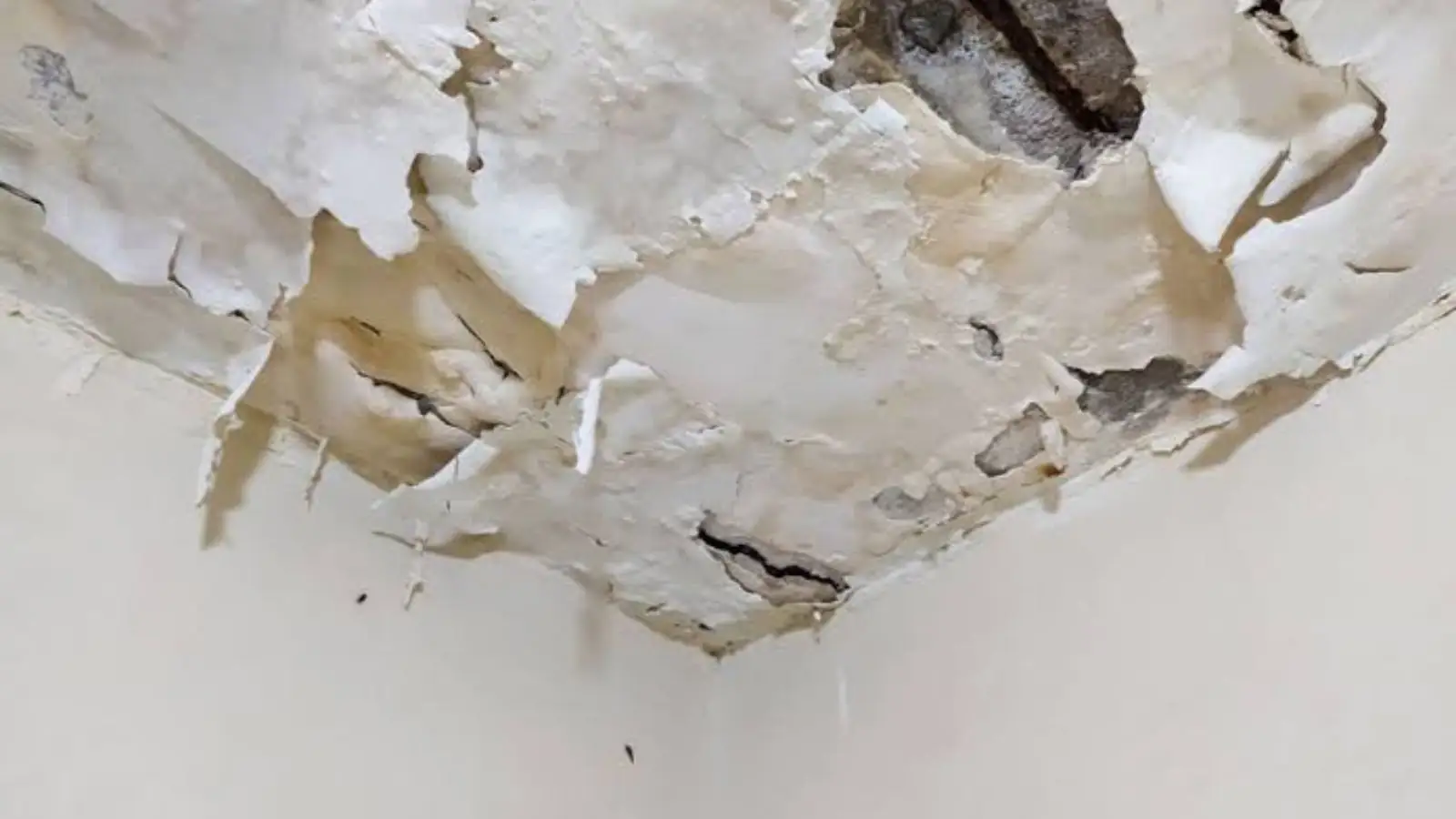
Water damage on a ceiling in Mission Hills, CA is urgent when the ceiling is still wet, sagging or dripping. A ceiling can hold a lot of water, and it can fail without much warning. This guide covers the first hour, the safety points and the repair steps once the water is under control.
If water is coming through a light fixture or you see sparking, stay out of the room and call 911 or the utility. If the ceiling is bulging, keep people out from underneath it. Then call (818) 337-2642 so a crew can be arranged.
The first hour for a wet or sagging ceiling
Stop the source
If the water is from plumbing, close the main valve. If it is from the roof, protect what you can and call a roofer.
Clear the area
Move furniture and electronics out from under the wet area and place a bucket under any drip.
Relieve pressure safely
A bulging ceiling may hold water, and poking it can send it down suddenly. If you do it at all, stand to the side with a bucket and eye protection.
Photograph everything
Take photos before moving things. They help with a claim later.
Electrical hazards
Water that touches a ceiling light, a fan or wiring is a shock hazard. Turn off the breaker only if the panel is dry and reachable. If not, stay out and call 911 or the utility.
Why ceilings fail
Drywall is gypsum with paper facing, and it weakens as it absorbs water. A soaked ceiling holds the weight of water plus insulation, and it can pull away from its fasteners. The longer it stays wet, the more likely it is to sag or drop.
| Warning sign | What it means | What to do |
|---|---|---|
| Brown stain spreading | Water is still entering or recently did | Find source, dry and monitor |
| Bulge or sag | Water or wet insulation is pooling above | Keep clear, call for help |
| Drip from a fixture | Water reached wiring | Stay out, power off from dry position, call 911 |
| Cracking or peeling paint | Moisture pushing from behind | Dry the area and inspect |
| Musty smell | Long-term damp materials | Inspect for mold |
Ceiling wet right now?
Call the 24/7 line. A dispatcher will help you with the first steps.
Drying comes before repair
Once the source is stopped, the structure has to dry. Air movers and dehumidifiers pull moisture from the ceiling and the cavity above it, and a technician checks readings daily. The water mitigation page explains how that process works.
Sometimes the ceiling is opened to speed drying. Wet insulation is removed, and the board is cut back to dry material. After that, repair follows the steps on the water damage repair page.
What a crew checks when the ceiling is opened
When a ceiling is opened, the technician looks at the insulation, the framing, any wiring and the source of the water. Moisture readings are taken in the cavity and in nearby walls, since water often runs along joists. Wet insulation is removed, and any dark growth is noted for a separate plan.
Wiring in a wet cavity is checked or turned off until it is safe. If the cavity holds a lot of water, it is drained before the board is removed, to avoid a mess below. These steps are slow on purpose, and they protect both the crew and your home.
Keeping it from happening again
- Check roof flashing, vents and shingles or tiles before winter rain.
- Replace aging supply lines and fixtures on upstairs bathrooms.
- Clear gutters and downspouts.
- Run bathroom fans during showers.
- Check the condensate line on your air conditioning system.
Most ceiling failures give warning signs, such as a slow stain or a musty smell. Acting on the first sign usually saves more than waiting for a drip. A small inspection is cheap compared with a collapsed ceiling.
Documenting an active ceiling leak for insurance
Photograph the stain, the dripping, any bulging and the room contents before you move anything. Short videos help show how fast water is arriving. Write down the time you noticed it and every step you took afterward.
Keep receipts for emergency supplies and for any trade you call. If the ceiling or insulation is removed, photograph it before it is bagged. Sudden and accidental leaks are often covered, so your record can shorten the conversation with an adjuster.
Protecting the room while you wait for help
Move furniture, rugs and electronics out from under the stained area, or cover them with plastic. If the ceiling is bulging, place a bucket beneath it and turn off power to that room at the breaker if any light fixture is wet.
Do not poke the bulge to drain it unless a professional tells you to, because a controlled small hole is safer than a sudden collapse. Keep the area clear and take photos before anything is moved.
Once the area is safe, find the source. Check the room above for a wet floor, a leaking fixture or a failed seal. For a roof leak, look from the ground for missing or lifted shingles, and avoid climbing on a wet roof.
Call a plumber or roofer for the leak itself and a restoration team for drying. These are separate jobs, and a good restoration team will tell you when the source needs someone else first.
Do not cut into the ceiling to look unless you know how to do it safely, because wet insulation can be heavy. Ask a helper to steady a ladder if you must use one.
The industry reference for water loss work is ANSI/IICRC S500, the Standard for Professional Water Damage Restoration. It describes water categories, drying goals and how to document readings. Citing it here is not a claim about any certificate. It simply gives you a published benchmark to ask a company about.
Local note: power and utilities in Mission Hills
The Los Angeles Department of Water and Power supplies both water and electricity in the City of Los Angeles, and it asks customers to report water main breaks or power outages by phone and power outages online. If a main break or an electrical problem is the cause, report it to the utility and call 911 for any immediate hazard.
The community is in the northern San Fernando Valley, near the I-5, I-405 and SR-118 corridors. Give dispatch your nearest cross street so the crew can plan a route.
Source type: City utility guidance, encyclopedic neighborhood summary
Active ceiling leak questions
Should I poke a hole in a bulging ceiling in Mission Hills?
Only as a last resort, because water can come down fast. If you must, stand to the side, place a bucket and wear eye protection. A professional can open it safely.
Can a wet ceiling collapse?
Yes. Saturated drywall can fail, so keep people and pets out from underneath it until it is assessed.
Do I turn off the power if the ceiling is wet?
Only if you can reach the panel while standing on dry ground. Otherwise stay out and call 911 or the utility.
If you live nearby, the Sylmar page and the San Fernando page explain who to call for utility issues in those places.