
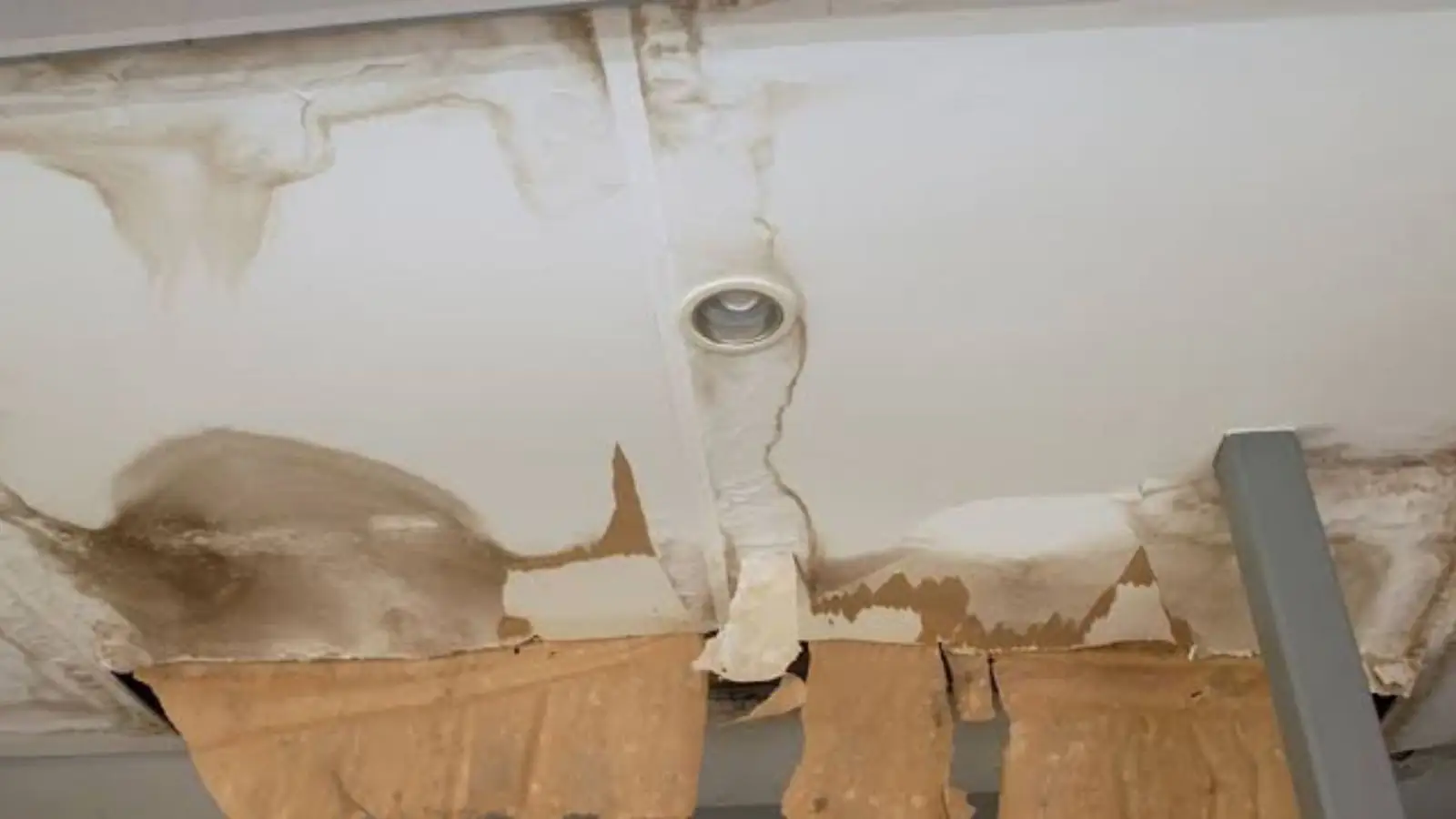
To repair ceiling water damage in Mission Hills, CA properly, you first have to know where the water came from. A roof leak and a plumbing leak above the ceiling look nearly the same from below, but the fix is completely different. Repairing the ceiling without fixing the source just repeats the damage.
This guide shows how to tell the difference, how to test your own plumbing and what to hand off to a roofer or plumber. It ends with the repair itself, which follows the same steps once the source is under control.
Roof leak or plumbing leak?
| Clue | Points to roof | Points to plumbing |
|---|---|---|
| Timing | Appears or grows during and after rain | Appears regardless of weather |
| Location | Under roof lines, vents, chimneys and valleys | Under bathrooms, kitchens and laundry |
| Pattern | Often irregular, near edges | Often a round or oval stain below a fixture |
| Water bill | No change | May rise with no explanation |
| Sound | None | Faint running or dripping sound |
Mixed cases exist. A roof leak can follow a pipe or a joist and appear far from the entry point. If the stain is in a room with no plumbing above it, suspect the roof, and if it appears under an upstairs bathroom, suspect plumbing.
A simple meter test for plumbing leaks
- Turn off every fixture and appliance that uses water, including the ice maker.
- Find your water meter and note the dial or reading.
- Wait 15 to 30 minutes without using any water.
- Check the meter again. Movement suggests a leak somewhere in the system.
- Close the main valve and check again to see if the movement stops.
If the meter moves with everything off, a plumber can find the leak with listening equipment or a camera. Water in a Mission Hills home comes through the Los Angeles Department of Water and Power, so the meter belongs to the utility. Ask LADWP if you are unsure how to read it.
Cannot tell where it is coming from?
Call the line. A technician can use moisture meters and a thermal camera to trace the wet path.
Hand-off: who fixes what
- A roofer repairs flashing, shingles, tiles and roof penetrations.
- A plumber repairs supply lines, drains, fittings and fixtures.
- An HVAC technician repairs a clogged condensate line or leaking unit.
- A restoration crew dries the structure and then repairs the ceiling.
Do not skip the hand-off. Repair work on a ceiling that is still being rained on or fed by a drip will be damaged again. Ask the trade for a written note of what was fixed, which helps with an insurer or landlord.
Repairing the ceiling once the source is fixed
After the source is fixed and the structure is dry, repair follows a familiar order. Remove wet insulation and damaged board, hang new drywall, tape and texture, then prime and paint. The full process is on the water damage repair page, and drying is covered in water mitigation.
Match the paint across the whole ceiling plane, not just the patch. A spot-painted ceiling shows a halo under light. If you suspect mold, resolve that before closing the ceiling, because painting over it is not a fix.
What to photograph for the roofer or plumber
Take wide shots of the room and close shots of the stain, with a coin or ruler for scale. Photograph the attic or access area above, if you can reach it safely, and any water on insulation or framing. Note the date, the weather and whether anything was running at the time.
Hand these to the trade you hire. It saves time on site and it helps the tradesperson understand the pattern. It also gives your insurer a clear record of when the damage was found.
Seasonal checks that catch leaks early
- Before rainy months, look at the roof from the ground for missing or lifted material.
- After the first heavy rain, check ceilings and attic access for new stains.
- Every few months, look under sinks and behind toilets for drips.
- Check your water meter for movement once or twice a year with everything off.
These checks take minutes. They also build a baseline, so you notice when something is new. A leak found early costs far less than one discovered after the ceiling shows it.
When both roof and plumbing are suspects
Sometimes the clues point both ways. A stain under an upstairs bathroom that grows after rain may involve a roof vent or a bathroom fan duct that leaks. Condensation from an uninsulated duct can also drip onto a ceiling and look like a leak.
In these cases, test one cause at a time. Run the meter test for plumbing, then check the roof and vents after rain, and look at ducts in the attic. Keeping a short log of dates and weather shows the pattern that points to the answer.
Clues that point to the roof or to the pipes
Timing is the best clue. A stain that appears or grows only during or after rain points to the roof or a flashing detail. A stain that grows on dry days, or sits under a bathroom, kitchen or laundry, points to supply lines, drains or fixtures.
Check the water meter by turning off every fixture and watching whether the dial still moves. If it does, there is a leak somewhere in the plumbing. If it does not, the roof deserves a closer look.
When both causes seem possible, document the timing carefully for a week. A written log of rain, fixture use and stain size helps a roofer or plumber narrow things down quickly.
The industry reference for water loss work is ANSI/IICRC S500, the Standard for Professional Water Damage Restoration. It describes water categories, drying goals and how to document readings. Citing it here is not a claim about any certificate. It simply gives you a published benchmark to ask a company about.
Safety checks before you touch anything
- If water is near outlets, appliances or a light fixture, stay out and shut off power at the panel only from a dry spot.
- Do not walk under a sagging or bulging ceiling.
- Leave the area if you smell sewage, gas or burning, and call 911 for gas or fire.
- Keep children and pets out of the wet room.
Local note: checking your meter in Mission Hills
Mission Hills is served by the Los Angeles Department of Water and Power. In 2019, a 72-inch LADWP trunkline broke on Woodman Avenue, which shows how much water moves through the public system. A leak inside your own home is much smaller, but the same meter shows it.
If the meter moves with everything off, call a plumber. If your ceiling stain tracks with rain, check the roof, and if you rent, notify your landlord in writing. For permits tied to roof or plumbing work, ask the Los Angeles Department of Building and Safety.
Source type: City utility, utility-statement reporting, city department guidance
Finding the source of ceiling water damage
How can I tell a roof leak from a plumbing leak in my Mission Hills home?
Notice timing and location. Rain-related stains point to the roof, and stains under bathrooms and kitchens point to plumbing. A meter test helps confirm plumbing.
Can the leak be in the air conditioning?
Yes. A clogged condensate line or a leaking unit can stain a ceiling, so include HVAC in your checks.
Who do I call first?
If water is active, stop it and call the restoration line for drying. Then hire the roofer or plumber to fix the source.
For related local conditions, see the Pacoima page and the Granada Hills page.