
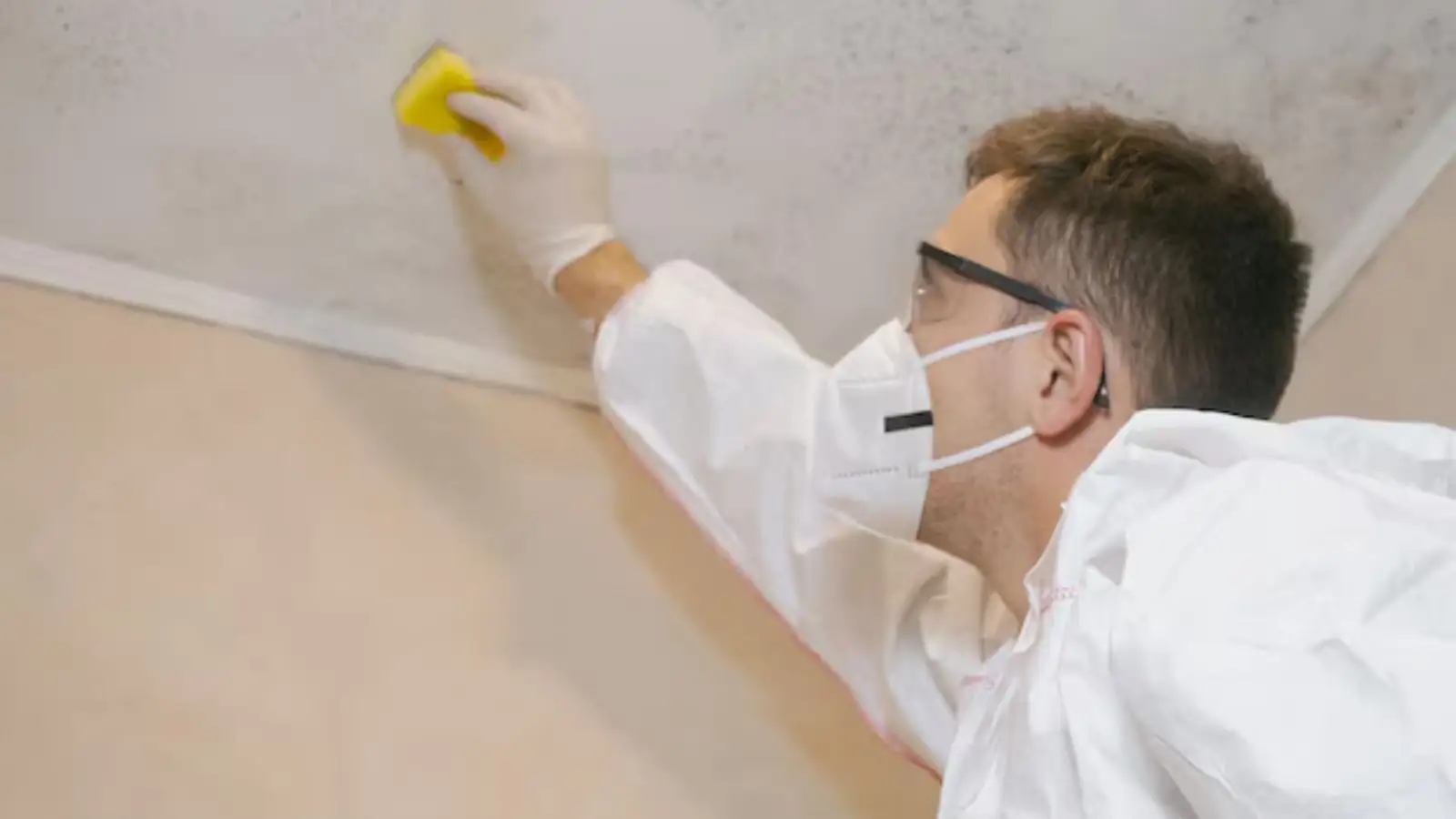
Learning how to remove mold at home in Mission Hills, CA starts with sorting the job into the size you can handle and the size you cannot. A small patch on a bathroom tile and a hidden colony behind a leaking wall are not the same project. The first can be a Saturday cleanup, and the second needs inspection and often professional containment.
Mold needs moisture, organic material and time. If you remove the growth but not the moisture, it returns. This guide covers what to clean, what to throw away and when to call.
Know what you are dealing with
Mold can look black, green, white, gray or fuzzy, and color does not tell you how serious it is. It may smell musty before it is visible. A discolored spot that wipes away with a damp cloth and does not return may be soap scum or mildew-like film, while a spot that returns after cleaning usually has a moisture source nearby.
Check the area behind and above the spot. Ceilings below bathrooms, walls around windows and the backs of closets on exterior walls are common places. A moisture meter gives a number, and a thermal camera shows cool, wet areas.
What you can clean and how
| Surface | Approach | Notes |
|---|---|---|
| Tile, glass and sealed counters | Scrub with detergent and water, rinse, dry fully | Use gloves and ventilate the room |
| Painted drywall, small patch | Often removed or replaced if growth has penetrated | Painting over does not fix it |
| Wood framing | Cleaning and drying, sometimes sanding | A professional should assess structural wood |
| Carpet and pad | Usually discarded when moldy | Porous materials hold growth |
| Fabric and upholstery | Wash if possible, discard if not | Treat items carefully |
EPA guidance says to scrub hard surfaces with detergent and water and dry them completely, and to discard porous materials that are moldy. It suggests handling a patch of less than about 10 square feet yourself in most cases. Larger areas, extensive water damage and sewage-related growth call for a professional.
Safety basics for any cleanup
Protect yourself
Wear a fitted respirator, gloves and eye protection, and avoid disturbing growth dry.
Contain the work
Close doors, seal openings with plastic and keep the HVAC system off.
Bag debris
Place moldy materials in sealed bags before carrying them out.
Mind health concerns
If anyone in the home has health concerns, talk to a physician before starting.
Do not mix bleach and ammonia or other cleaners, since the fumes are dangerous. If you scrub, wet the area lightly so spores do not fly. Never run a dry-sanding job inside a living space.
Not sure it is a small patch?
Call the line and describe the spot, the source and the size. A technician can explain inspection first.
Fix the moisture, or it will come back
The best cleaner is a dry wall. Repair the leak, run a fan in the bathroom and open the closet door a few inches for airflow. If a roof or siding leak caused it, call a roofer or contractor, and use the water damage repair page to understand the rebuild afterward.
If the area was wet from a flood or sewage, it is not a DIY job. See water damage cleanup for how contaminated materials are handled. Insurance may cover mold that resulted from a sudden and accidental loss, and policies differ, so check yours.
What to do with belongings that touched mold
Hard items such as dishes, glass and metal can be washed and dried. Fabric items can be laundered in hot water if the label allows. Paper, books and upholstered furniture that are moldy are often too difficult to clean fully and may have to be discarded.
EPA guidance says to consider a specialist for items that are expensive, delicate or sentimental. Photograph items before discarding them in case you need to document a claim. Keep affected items outside the living space while you decide.
Common mistakes to avoid
- Scrubbing dry, which sends spores into the air.
- Mixing bleach with ammonia or other cleaners.
- Painting over the area before it is dry and the source is fixed.
- Running a household vacuum without a HEPA filter on moldy debris.
- Ignoring the moisture source because the stain looks gone.
A single mistake is easy to fix. A pattern of them can turn a small job into a larger one, with materials that cannot be saved. If you are not sure, take a step back and call for guidance.
Protecting yourself while you clean a small area
For a small patch on a hard surface, wear an N95 respirator, gloves and eye protection, and open a window or run a fan that exhausts outdoors. Keep children, pets and anyone with breathing concerns out of the room until the work is done.
Bag the cleaning rags and any removed material before carrying it through the house. Wash your clothes separately afterward. If the patch is larger than you expected once you start, stop, close the door and call for guidance instead of pushing on.
Do not mix cleaning products, and never combine bleach with ammonia. The fumes are dangerous. Plain detergent and water, followed by thorough drying, handles many small hard-surface patches. Porous items like ceiling tiles and carpet usually have to be discarded instead of cleaned.
If anyone in the household has asthma or another breathing condition, ask a physician before you start the work. If symptoms appear during the work, stop and leave the room.
The industry reference for mold work is ANSI/IICRC S520, the Standard for Professional Mold Remediation. The EPA also publishes a free guide called A Brief Guide to Mold, Moisture, and Your Home. Both are useful benchmarks when you compare what a company says it will do.
Local note: Mission Hills homes
Mission Hills is a neighborhood of the City of Los Angeles in the northern San Fernando Valley, with an elevation near 913 feet. Many residents are in older housing, apartments and rentals. If you rent in the City of Los Angeles, notify your landlord in writing about any moisture or mold and keep copies.
If you hire a company, ask whether your state licenses mold work and ask for the license information in writing. For permits tied to any rebuild, ask the Los Angeles Department of Building and Safety, since rules depend on what work is done.
Source type: Encyclopedic neighborhood summary, city department guidance
Mold removal questions in Mission Hills
Is it safe to remove mold from a rental in Mission Hills myself?
Small patches on hard surfaces can often be cleaned, but check your lease and notify the landlord in writing before you begin. Larger areas should be assessed by a professional.
Does vinegar kill mold?
Some people use it on hard surfaces, but EPA guidance emphasizes detergent and water and complete drying. Whatever you use, the moisture source must be fixed.
When should I call a professional?
Call when mold covers more than about 10 square feet, when water damage is extensive, when sewage is involved or when you cannot find the moisture source.
If your home is in a nearby neighborhood, read the Sylmar page or the San Fernando page for local details.